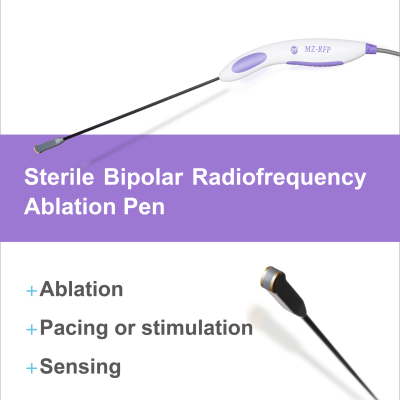
Radio Frequency Cardiac Tissue Ablation System
Model: MZ-RFS-I
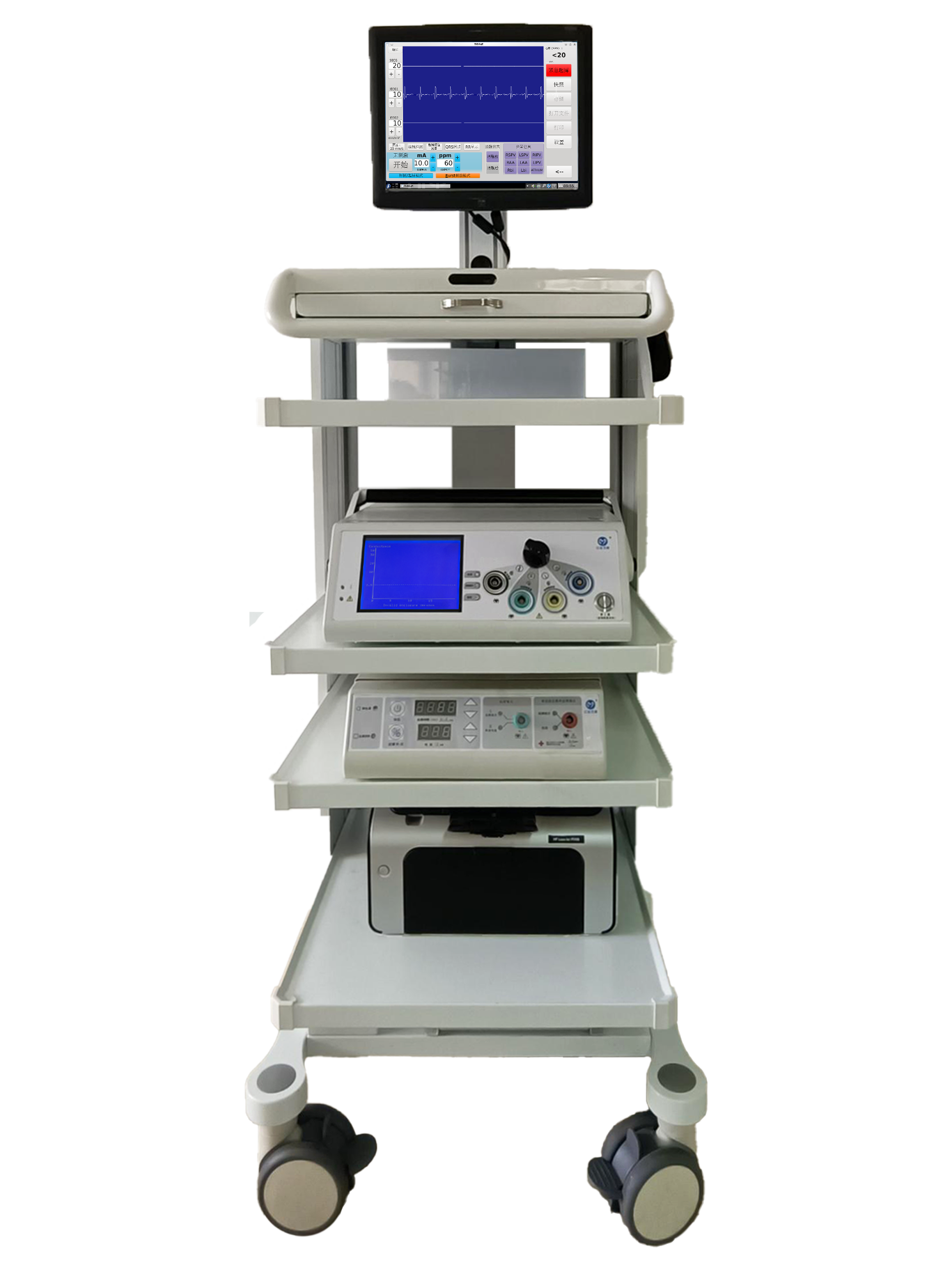
Two configurations:
Configuration 1: RF System, which comprises a complete system mounted on a Wheeled Cart, powered via an Isolation Transformer.
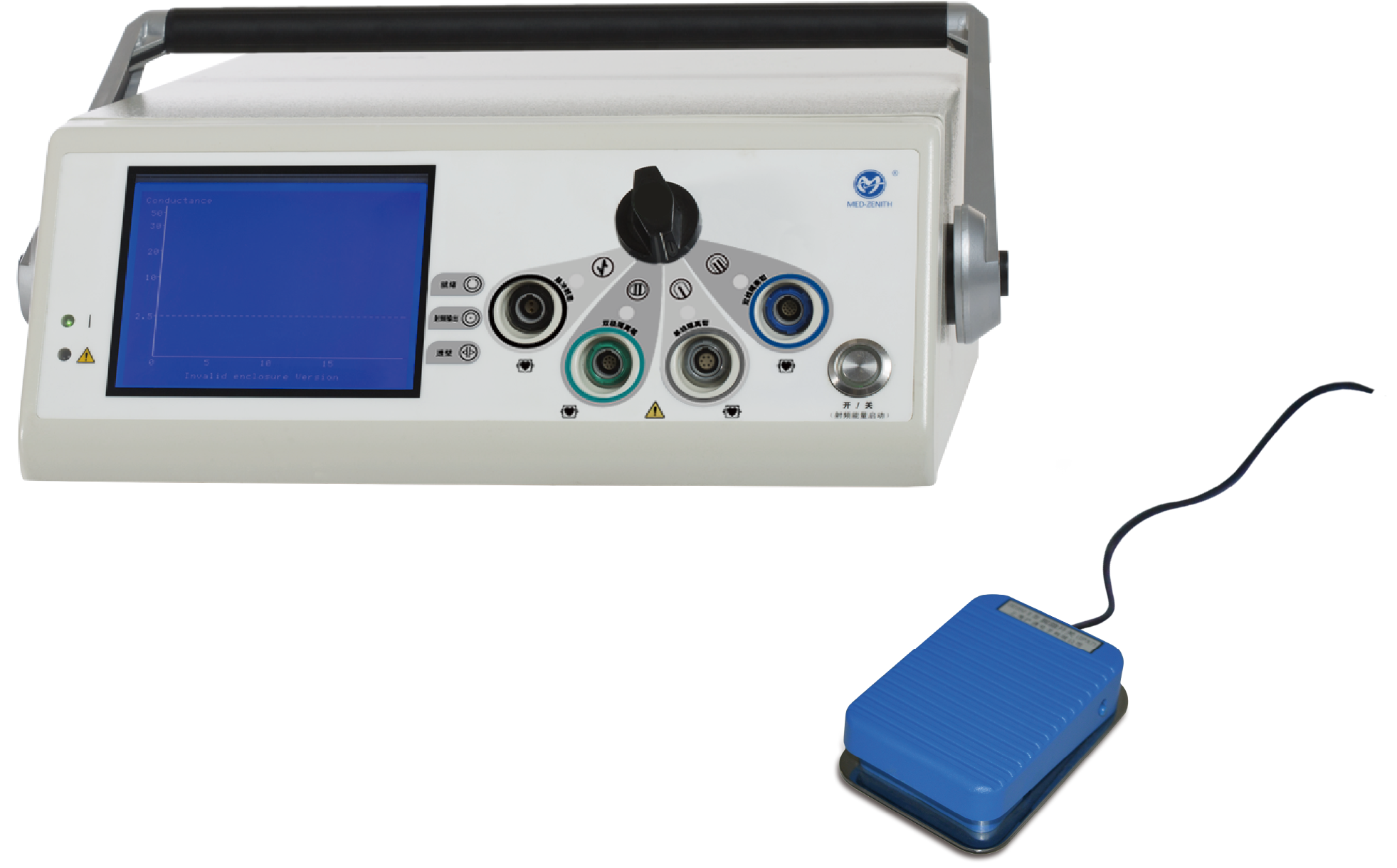
Configuration 2: comprises RF ablation part (Radiofrequency Ablation Generator, Footswitch) and power cable. It is directly powered by mains electricity.
Intended Use
MZ-RFS-I Radio Frequency Cardiac Tissue Ablation System is intended for use with the Sterile Bipolar Radiofrequency Ablation Clamp and Sterile Bipolar Radiofrequency Ablation Pen for the ablation of cardiac tissue and for the electrophysiological testing of the heart to treat atrial fibrillation during cardiothoracic surgery procedures.
Indication for Use
Atrial fibrillation which requires surgical intervention.
Contraindications
- AF patients with severe organic heart diseases and intolerance to surgery.
- Patient who has thrombus in left atrial wall (when MZ-RFC/MZ-RFM RF Clamp is used).
- AF patients with Pulmonary Vein Stenosis.
- Patient with obesity (this item applies to open heart surgery).
Please review the Instructions for Use for a complete listing of warnings and precautions prior to using these devices.
Compatible Devices
Sterile Bipolar Radiofrequency Ablation Clamp: MZ-RFK、MZ-RFC、MZ-RFO、MZ-RFM;
Sterile Bipolar Radiofrequency Ablation Pen: MZ-RFP-(01)、MZ-RFP-(02)、MZ-RFP-(03)
Functions
Ablation: The Radiofrequency Ablation Generator (RFG) of the RF System delivers 460.8 kHz RF energy through the RF Pen or the RF Clamp to the target tissue for ablation.
Pacing or stimulation: The Stimulus Generator Unit (SGU) of the RF System provides the RF Pen with pacing/stimulation pulses (pacing rate: 30–350 bpm; stimulation rate: 100–1800 bpm). The RF Pen then deliver these pulses to the heart to implement pacing or stimulation.
Sensing: The SGU can measure the electrophysiological signals from specific areas of the heart through the RF Pen. And the electrophysiological signal will be displayed on the RF System touch screen at the same time.